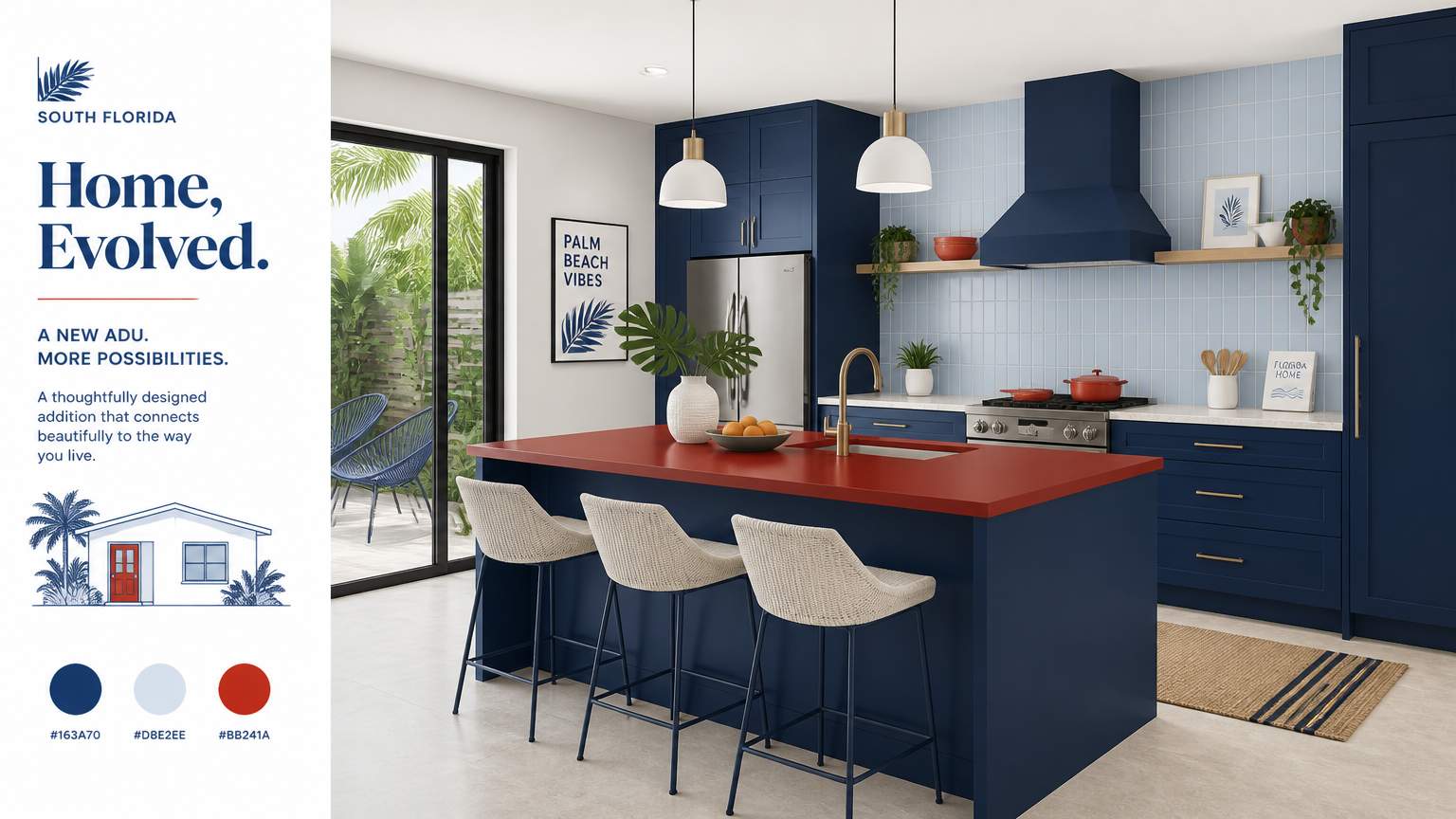
The recent passage of HB 399 allows for the construction of a manufactured home-style accessory dwelling unit (ADU) or modular addition on single-family lots. Previously, zoning restrictions prevented these units from being built in many neighborhoods, but now they can be incorporated into existing properties. However, this law does not remove the need for building permits, adherence to building codes, or local evaluations related to utilities and infrastructure. Essentially, if you want to add a modular ADU in Boca Raton, West Palm Beach, or other parts of Palm Beach County, you can do so by following the same permitting processes that apply to traditional additions, while addressing any potential impacts on water, sewer, and traffic.
The law treats manufactured homes similarly to site-built homes in terms of land use, zoning, and building codes. If the parcel is designated for detached single-family residences, a modular ADU, a two-story factory-built extension, or a small detached unit can be placed on the lot without needing a special zoning amendment. However, municipalities still have the authority to assess whether the project complies with existing utility capacity, road access, and storm-water management standards. Many jurisdictions in South Florida, for instance, will ask for an infrastructure assessment to ensure that the new unit does not strain water lines or hinder traffic flow. The law also states that any manufactured or modular unit must adhere to the Florida Building Code standards, ensuring fire safety, structural integrity, and energy efficiency.
To navigate permits, infrastructure checks, and budgeting for a modular ADU, your first step should be to hire a licensed design-build contractor who has experience with modular construction and local code requirements. They will create construction drawings that detail the ADU’s size, foundation type, and utility connections, which are necessary for the building permits application. When submitted, the county planning office will likely request a traffic impact analysis and a water-sewer capacity study, which are often conducted by engineering firms and can increase the overall cost by several thousand dollars.
Make sure your budget includes the base price of the modular unit, permit fees (which can vary by jurisdiction but usually range from 1-2% of construction value), the engineering studies, and a buffer for any necessary upgrades to existing utilities.
Timing is also critical. In Palm Beach County, the permit review process for a modular ADU typically takes 45-60 days, but if the infrastructure assessment identifies issues, the timeline can be extended by several months. To expedite the process, ask your contractor to coordinate utility upgrade requests alongside the permit filing. Expect to spend between $120,000 to $180,000 for a 600-square-foot modular ADU in the Fort Lauderdale area, depending on finishes, site conditions, and required infrastructure improvements. Homeowners planning a kitchen or bathroom remodel should combine those costs into a single home renovation estimate to avoid duplicated fees.
While a modular ADU can save construction time compared to a stick-built addition, typically offering a finished space in 8-12 weeks after permit approval, it may come with less flexibility in design. Modular units are built around factory-produced panels, so significant layout changes may necessitate a new order. Financially, lower labor costs can balance out the cost of the required infrastructure studies, but homeowners might also face impact fees if local road networks are near capacity. In neighborhoods with narrow streets, the county may request a traffic mitigation plan, which can add to both cost and time. For families adding a guest suite or home office, the modular option is often practical, while a larger, multi-room addition might still be more suitable through traditional construction.
American Developer Group is a Florida-licensed design-build firm that aids South Florida homeowners with modular additions, ADU permitting, and full-home remodels. Their team manages code compliance, coordinates infrastructure assessments, and collaborates with local officials in Boca Raton, Delray Beach, and surrounding areas to ensure projects remain on time and within budget.


